

In collecting terminology, a chase card is a card many people aim to obtain from a particular Pokémon TCG set. The name comes from the English verb ‘to chase’ and describes a collecting target rather than an official printed rarity. Reasons can include: scarcity, artwork, the Pokémon's popularity or gameplay usefulness, or a combination of these. Its status can change with restocks, sealed-product availability and secondary-market demand.
Contents
Defining a chase card
A chase card is usually the most sought-after card or one of the most sought-after cards in a set at a particular time. It attracts searches, trades and pack openings. The term is common in modern sets, which contain many versions such as alternative illustrations, Full Art and gold printings. Older sets can also have cards that dominate collector demand.
Common examples include:
- alternative illustrations, described as Illustration Rare or Special Illustration Rare depending on the era;
- higher-rarity variants such as some gold cards;
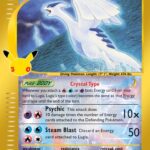
- cards featuring widely followed Pokémon (Charizard, Pikachu, Lugia, Giratina, Umbreon, Rayquaza and others);
- artwork whose illustrator, style or scene attracts continuing interest.
No official printed wording defines a chase card. Its status reflects buying and trading behaviour. A very scarce card may have little demand, while a less scarce one can become a major target.
What drives demand: scarcity, artwork, character and play
Several factors can make a card a priority. Collectors often mention rarity , but demand is not determined solely by pull frequency.
Perceived scarcity and pull rates
Opening videos, shop reports and resale listings can quickly create a perception that a card is difficult to pull. These observations may influence buying even when no official probability is available.
The Pull rate, also called drop rate, means the probability of obtaining a particular card or category from a pack or sealed product. Such estimates are not always officially published and depend on the product and sample.
Artwork and collecting interest
A scene or alternative illustration can attract collectors without any gameplay interest. Binder themes, matching Pokémon illustrations and display preferences all contribute. A chase card is often a card that stands out visually and is selected for a dedicated binder page or display.
Pokémon popularity
Charizard and Pikachu have broad followings, alongside Pokémon such as Lugia, Giratina, Umbreon and Rayquaza. A large fan base can support demand for a particular printing, especially alternative artwork.
Gameplay use
A card used in competitive lists can attract players as well as collectors. Its regular printing may be practical for play, while a Full Art or alternative version becomes a target for a higher-finish deck.
Chase card, hit and top pull: practical differences
Pack-opening vocabulary distinguishes three common terms.
- Hit : a pull considered notable for its rarity or illustration. It need not be a major chase card.
- Top pull : the best result from a particular opening session, rather than the most demanded card across the whole set.
- Chase card : a set's widely sought-after card over a particular period.
A chase card is often a hit, but not every hit is a chase card. Market-wide searches, transactions and prices help distinguish them.
Examples of French chase cards and their numbers
The examples below are frequently cited collecting targets. Their numbers use the format card number / main set total. Numbers above the main total identify additional variants commonly described as secret rares.
| Card (French printing) | Number | Set (French printing) |
|---|---|---|
| Charizard ex | 223/197 | Scarlet & Violet—Obsidian Flames |
| Mew ex | 205/165 | Scarlet & Violet—151 |
| Pikachu | 173/165 | Scarlet & Violet—151 |
| Giratina V | 186/196 | Sword & Shield — Lost Origin |
| Lugia V | 186/195 | Sword & Shield — Silver Tempest |
| Umbreon V | 188/203 | Sword & Shield — Evolving Skies |
| Rayquaza VMAX | 218/203 | Sword & Shield — Evolving Skies |
These examples combine: a popular Pokémon + a sought-after version + visible secondary-market activity. Other cards may compete for attention within the same set as preferences and prices change.
Identifying demand beyond pack-opening trends
Observable evidence gives a firmer basis than short-lived pack-opening attention. Repeated openings can become costly when a purchase plan depends only on social visibility.
Useful signals include:
- Price gap : the card may sell above other references from the same set, including similar rarity levels.
- Completed-sales activity : repeated comparable sales indicate actual demand more clearly than asking prices alone.
- Repeated buyer interest : wanted listings, wish lists and local trade requests.
- Active listing quantity : many listings can coexist with strong demand, so the number alone is not enough.
- Condition detail : repeated emphasis on centring, corners and clean surfaces suggests close attention to copy quality.
A set's chase card is often an alternative illustration, but need not be the rarest reference by printing category. Character popularity can outweigh nominal rarity.
Opening packs or buying singles: costs and limits
A target card changes how some collectors buy. Opening packs and buying a single have different costs and outcomes.
Opening packs for one particular card
Pack opening rarely provides the lowest predictable cost for a specific rare card. Even opening several boxes does not guarantee it. Other pulls may have collecting value, but the intended result remains uncertain.
Buying the single
A single-card purchase fixes the reference and price in advance, subject to seller accuracy and condition checks. This avoids spending repeatedly on sealed products without obtaining the target, but requires assessment of photographs, postage and description.
One budgeting approach is to:
- set an opening limit such as one ETB or part of a booster box;
- then switch to buying the single ;
- and use duplicates for trades or partial funding.
A limit preserves pack opening as a hobby while reducing repeated spending driven by the feeling that the next pack must contain the card.
Card number, language and printing: avoiding mistakes
Common buying errors concern the number, printing, language or an ambiguous description.
The collector number
The Pokémon's name alone is insufficient. Regular, Full Art and alternative versions can share a name. A number such as 223/197 or 205/165, identifies the exact printing and also makes trades clearer.
Language
French cards have an active collecting market, particularly for consistent-language binders. English may circulate more widely internationally. A listing needs readable text showing the actual language.
Printing and set
Reprints can reuse a name or similar artwork with another number. A stated set, such as Obsidian Flames or 151) helps prevent confusion.
Condition, centring and small flaws
Condition often explains price differences between otherwise matching cards. Modern-card flaws can be small but significant:
- white corner marks or minor edge wear, often on the reverse;
- fine scratches on reflective surfaces;
- pressure marks from handling or transport;
- centring that is visibly uneven;
- print lines or other manufacturing defects.
The relevant question is whether the copy is suitable for its intended use : binder, display, resale or grading. A satisfactory binder copy may not suit a collector seeking a top grade.
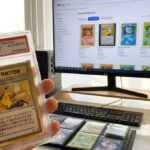
Grading: benefits, costs and limits
Grading provides a company's condition opinion and a sealed holder. It can standardise part of a comparison, but is not necessary for every chase card.
When grading may be useful
- The card's value can reasonably absorb shipping, insurance and grading fees ;
- and the copy has clean surfaces and suitable centring;
- the aim is protected storage or resale with a recognised condition assessment.
When grading adds little
- Visible flaws already limit the likely grade;
- the service cost is large relative to the card's value;
- the card is intended simply to complete a binder.
A grade is never guaranteed. Fine defects can be missed in ordinary photographs or casual inspection. Grading is a form of condition standardisation, with costs and an uncertain result, rather than automatic value creation.
Protection, storage and shipping
Suitable protection reduces damage from handling and storage.
- Sleeve placed around the card after opening or receipt.
- Toploader or semi-rigid holder to reduce bending and impact.
- Side-loading binder pages to limit movement and slipping.
- Storage away from excessive heat and direct UV exposure, reducing fading and deformation.
For postage, a sleeved card in a rigid holder can be secured between cardboard and placed in suitable protective packaging. An ordinary flexible envelope alone provides little protection against bent corners.
Collecting a chase card within a budget
A single chase target can absorb an entire budget. A staged plan can keep attention on other cards in the set.
Stage 1: main-set and playable cards
Completing basic rares, needed play cards and lower-priced illustrations creates a useful collection even before the main target is obtained.
Stage 2: other collecting targets
Sets often have several sought-after cards. A secondary target may be more affordable and remain useful for collecting or trading.
Stage 3: the main chase card
Once the broader set is established, a single-card purchase provides a defined price and selected condition. Pack opening can remain separate entertainment.
This approach helps avoid an unplanned sequence of openings and supports fuller binder pages, managed duplicates and a broader collecting focus.
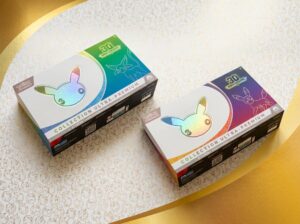
Promos tied to specific products
Some sought-after cards come from collection boxes, events or promotional distributions rather than regular packs. Their availability depends on the associated product.
Useful checks for a promo include:
- whether the card is guaranteed inside the product rather than randomly inserted;
- whether the product remains readily available at its ordinary price;
- whether its packaging commonly affects condition.
For a guaranteed promo, buyers can compare the single with the complete sealed product rather than opening unrelated boosters in search of it.
A practical pre-purchase checklist
A few checks can prevent common mistakes.
- Exact number : for example Charizard ex 223/197 rather than another printing.
- Expansion : Obsidian Flames, 151, Lost Origin, and related details.
- Clear photographs : front, reverse, corners, edges and an angled view of the surface.
- Language : readable French text on the pictured copy.
- Stated condition : specific reverse and edge defects rather than a general description such as ‘clean’.
- Shipping protection : a sleeve and rigid support appropriate to the card.
Precise identification and condition descriptions reduce disputes about the wrong printing or an overstated condition. This matters particularly where small differences produce large price gaps.