
Complete sets and master sets: defining the scope
Collectors generally use ‘master set’ for an expansion together with its parallel finishes, particularly reverse holos. The exact contents nevertheless depend on the convention adopted. One listing may include promos while another stops at booster-pack cards. The name alone does not describe the collection adequately.
A written checklist states the language, expansion, included numbers and versions sought. ‘One card of every number’ does not necessarily include both finishes of a reference. Two identical copies remain duplicates and do not increase the number of versions owned.
| Collection | Declared contents | Point to check |
|---|---|---|
| Numbered set | One card for every included number. | Whether cards beyond the printed denominator are present. |
| Set with reverse holos | The selected references and their existing reverse-holo versions. | No invented slots for finishes that were never produced. |
| Master set including promos | The above collection plus an explicit list of promo cards. | The source product, language and stamp on each promo. |
| Multilingual collection | Several language editions. | Numbering matches and the contents specific to each edition. |
The printed denominator does not always give the full set size
In the Pokémon 151 gallery, Bulbasaur 166/165 and Venusaur ex 198/165 exceed the printed denominator of 165. This does not mean the expansion stops at card 165. The total depends on the complete checklist and additional finishes included.
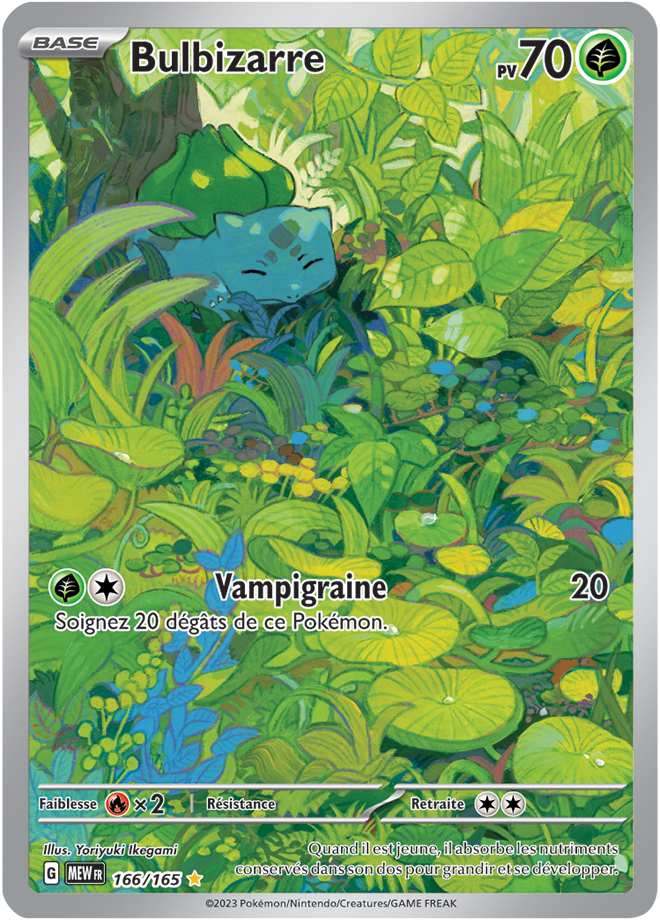


These three illustrations have distinct numbers. They are not reverse-holo versions of cards with different numbers. A tracking sheet must retain this distinction even when several cards depict the same Pokémon.
Standard, holographic and reverse-holo versions
A reverse-holo card has a reflective treatment different from a regular holographic card. The precise distribution depends on the expansion, and not every reference exists in every finish. Automatically doubling the card count therefore produces an inaccurate checklist.
The official checklists distinguish versions using boxes and symbols. Each document's key needs to be read separately. A gallery card with a GG prefix, for example, belongs to a numbering sequence separate from Crown Zenith's main set.
Promo cards: included only when the checklist says so
An ETB promo can accompany an expansion without belonging to its main numbering sequence. Snorlax SVP 051 and the cards of Pokémon 151 illustrate this distinction. Inclusion in an ETB does not automatically place a promo in every definition of that expansion's master set.
The chosen scope may include ETB promos, cards from specific collections or stamped versions. Each addition needs to be identified. The list of ETBs and their promo cards helps identify the associated box without confusing its contents with booster-pack cards.
Building a usable tracking sheet
| Field | Example entry | Purpose |
|---|---|---|
| Reference | Bulbasaur 166/165 | Avoid confusing two illustrations. |
| Language and finish | French · illustration rare | Compare the correct version. |
| Condition and quantity | Described condition · 1 copy | Separate the chosen copy from duplicates. |
| Total cost | Purchase price plus shipping | Track the amount actually spent. |
| Status | Missing, ordered or received | Avoid buying another copy while one is in transit. |
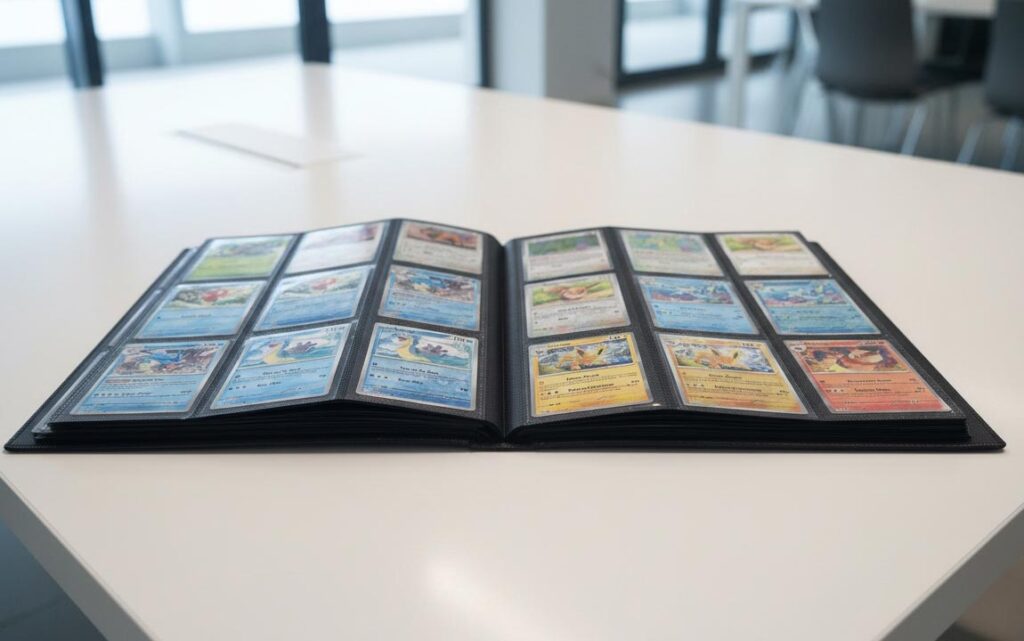
The binder can follow the tracking sheet: main numbering, cards beyond that numbering and then the selected promos. Labelled empty slots make gaps visible. The binder should hold enough pockets without compression, with each card in a protective sleeve.
Completing the collection without accumulating duplicates
Early pack openings may fill many gaps. As the missing list shrinks, random purchases produce more duplicates. Buying a single targets an exact reference, whereas a booster guarantees no particular card.
The comparison includes missing-card costs, shipping and the budget allocated to opening packs for enjoyment. A lot may reduce the number of shipments, but its contents and each card's condition still need checking. The Pokémon collection tracking method helps separate these expenses.
Before buying a collection described as complete, a line-by-line checklist and clear photographs provide the most useful check. A sales description does not replace an inventory. The galleries organised by expansion provide a starting point for identifying references and omissions.