Growlithe, Rockruff, Yamper and Fidough give dogs a visible presence in the Pokédex. This illustrated list identifies their families and evolutions, separating distinct species from changes of form.
Scope: eleven canine families comprising 22 species, with Zacian and Zamazenta listed separately. Regional forms, trims and Mega Evolutions do not count as additional species. Ambiguous cases are discussed below.
Dog Pokémon and their evolutions
| Family | Generation | Usual type | Evolution |
|---|---|---|---|
| Growlithe → Arcanine | 1 | Fire | Fire Stone |
| Snubbull → Granbull | 2 | Fairy | Level 23 |
| Houndour → Houndoom | 2 | Dark / Fire | Level 24 |
| Electrike → Manectric | 3 | Electric | Level 26 |
| Lillipup → Herdier → Stoutland | 5 | Normal | Level 16, then level 32 |
| Furfrou | 6 | Normal | No evolution |
| Rockruff → Lycanroc | 7 | Rock | Level 25; form depends on the time, game and Ability |
| Yamper → Boltund | 8 | Electric | Level 25 |
| Fidough → Dachsbun | 9 | Fairy | Level 26 |
| Maschiff → Mabosstiff | 9 | Dark | Level 30 |
| Greavard → Houndstone | 9 | Ghost | Level 30 or above at night |
These methods apply to the main-series games in which each family appears. Pokémon GO has separate rules, often based on Candy. Conditions specific to particular versions, especially for Lycanroc, need to be checked for the relevant game.
1. Growlithe → Arcanine


Growlithe has orange fur with black stripes and prominent cream-coloured hair. Arcanine retains these colours but has a much fuller mane and tail. The family develops from a small, alert dog into a larger, heavier silhouette.
Growlithe and Arcanine also have Hisuian forms with Fire and Rock typing. These are regional forms of the same species, so they do not add two new species to the list.
2. Snubbull → Granbull


The short muzzle, fangs and stocky build give this family a bulldog-like appearance. Snubbull has a rounded pink silhouette; Granbull grows taller while retaining a particularly pronounced jaw.
Fairy is the family's current type. Both Pokémon were Normal types before Fairy was introduced, so an older guide may give different information without describing different species.
3. Houndour → Houndoom


Houndour and Houndoom have dark canine bodies with pale, bone-like markings. Evolution brings larger horns and a longer tail, moving their appearance further from that of a domestic dog.
Their muzzle, paws and ears resemble those of several breeds, but identifying a specific breed requires a source. The comparison here rests on visible canine features and the relationship between the two species.
4. Electrike → Manectric


Electrike has a low body, four legs and an angular design that reflects its Electric type. Manectric develops a large, pointed mane in blue and yellow.
This family shows that a dog Pokémon does not need realistic fur. Angles and colours communicate its type, while the posture and muzzle retain a canine appearance.
5. Lillipup → Herdier → Stoutland


This is the only three-species family in the main selection. Facial fur becomes progressively longer: a small mask on Lillipup, a moustache on Herdier and long, flowing hair on Stoutland.
The head and length of the facial hair provide useful identification marks. A collection of all three follows a clear visual progression without requiring knowledge of their game statistics.
6. Furfrou

Furfrou resembles a long-haired dog whose appearance changes with different trims. Its Natural Form has thick white fur around a slender, dark body.
Furfrou's trims are not evolutions. Several appearances of the same Pokémon do not automatically mean several species when counting dog Pokémon.
7. Rockruff → Lycanroc


Rockruff resembles a brown-and-cream puppy with small rocks around its neck. Lycanroc develops a more wolf-like appearance. Its Midday, Midnight and Dusk Forms differ markedly in posture.
Dusk Form requires a Rockruff with the Own Tempo Ability and evolution at the appropriate time. Exact time windows depend on the game, so the conditions must match the version being played.
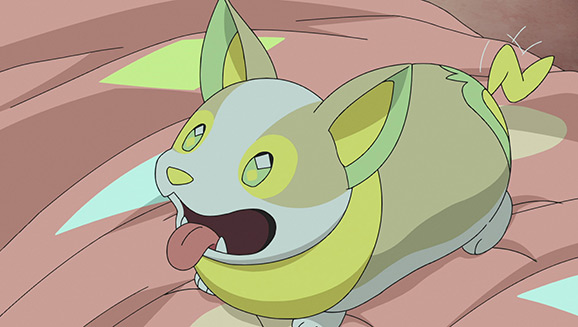
8. Yamper → Boltund


Yamper has a low body, short legs and rounded hindquarters. Boltund is leaner, with the proportions of a running dog. Their Electric-type colours link the two designs.
The contrast between Yamper's compact body and Boltund's long legs is the clearest visual distinction. Their proportions change substantially, whereas other families mainly develop longer fur.
9. Fidough → Dachsbun


Fidough combines a small dog's body with dough-like shapes, particularly around its ears. Dachsbun develops the theme through golden-brown colours and an elongated body resembling baked bread.
The food theme leaves the muzzle, legs and ears clearly recognisable. This family suits a selection of playful illustrations or Pokémon with rounded designs.
10. Maschiff → Mabosstiff


Maschiff has large jaws and eyebrows that emphasise its expression. Mabosstiff gains bulk and longer fur, with the face dominating its design.
Their clearly canine bodies justify their inclusion. Dark typing is a game category and should not be treated as a behavioural assessment comparable to that of a real animal.
11. Greavard → Houndstone


Greavard combines a small, shaggy body with a candle on its head. Houndstone retains the ghost-dog theme with more visible bones and a gravestone motif.
The two species share a visual family but create different moods. Houndstone requires the relevant level-up to take place at night in the games concerned; reaching the required level during daytime is not enough.
Zacian and Zamazenta: two wolf Pokémon


These two Generation VIII Pokémon have wolf-like bodies. They are listed separately from the eleven families because they are independent species: Zacian does not evolve into Zamazenta, nor does Zamazenta evolve into Zacian.
Their sword- and shield-related appearances are changes of form, not evolutions into one another. Keeping this distinction avoids counting every appearance as a different species.
Cases that need an explanation rather than automatic inclusion
Eevee: its creator aimed for an animal that could not be pinned down to a single species. A separate article examines the fox, cat and dog interpretations ; Eevee is not included in the main total.
Poochyena and Mightyena: their appearance and names suggest hyenas. A hyena is not a canid, although its body may resemble a dog's. They can belong in a broader selection of lookalikes if that choice is clearly explained.
Riolu and Lucario: their designs combine canid-like features with an upright, human-like posture. They are relevant to a discussion of visual influences but are separate from the dog families and wolves included here.
An idea for a dog-themed binder page
Nine cards can follow a simple rule: nine species, three families occupying three slots each, or a progression from puppy to adult companion. A two-species family can use its third slot for another illustration of the same Pokémon. Recording the card number distinguishes another species from another artwork.
The name, expansion and number also support meaningful comparisons between listings. Two Growlithe cards are not necessarily the same collectible. A common illustration that completes the page may suit the collection better than a rare card unrelated to the others.
Frequently asked questions
How many dog Pokémon are there?
The total depends on the definition. This selection contains 22 species across eleven families, followed by two wolf Pokémon. Alternate forms are not counted as extra species.
Does Furfrou evolve?
No. Its trims change its appearance but do not form an evolution chain.
Are Zacian and Zamazenta part of the same evolution line?
No. They are distinct species. Their changes of form do not turn one into the other.
Why not use a total of 40 or 50 dogs?
Some lists include foxes, hyenas, ambiguous designs or several forms of the same species. The scope here states exactly which groups are included.
Related reading
Sources and credits
- Pokémon.com: a selection of canine Pokémon
- Pokémon Database: evolution chains and conditions
- Poképédia: Fidough's evolution
- Poképédia: Maschiff's evolution
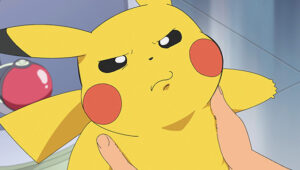
- Source of the Yamper scene used as the featured image
Pokémon illustrations: © Pokémon / Nintendo / Creatures / GAME FREAK, shown for identification and commentary; Pokémon Database. Real photographs are credited individually. The cute Pokémon and animal selection covers were generated for TCG Insight; the other three covers show scenes from the series sourced from Pokémon.com.