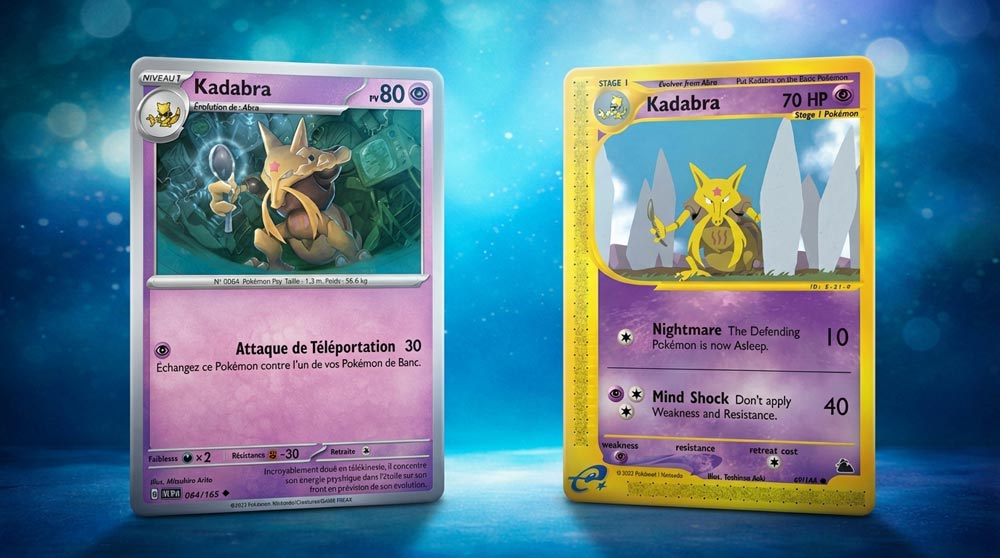
Kadabra is a first-generation Pokémon that appeared in the early Pokémon TCG. This Psychic-type (Psi)Pokémon is usually shown holding a spoon, a reference to spoon-bending performer Uri Geller. Following his objection, Kadabra was absent from new TCG releases for almost twenty years. Two cards frame that period: number 69 from Skyridge (2003) and number 64 from Pokémon 151 (2023). These editions stand on either side of Kadabra's long absence from new sets.
Contents
Kadabra's history in the TCG
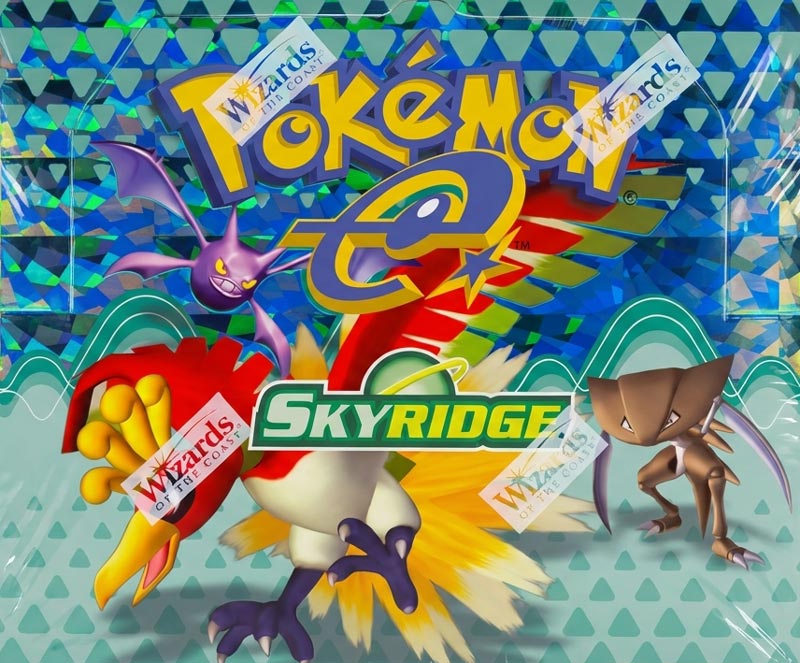
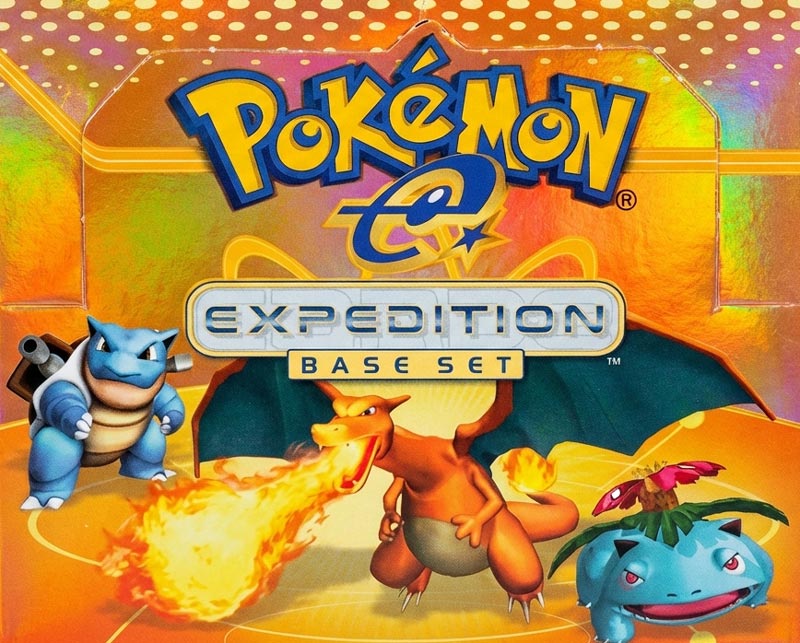
Kadabra (Japanese: Yungerer) is a Psychic-type Pokémon in the evolution line fromAbra to Alakazam. Its spoon represents its psychic abilities. In 2000, Uri Geller accused Nintendo of using his name and likeness to create Kadabra without permission. After the dispute, Kadabra disappeared from new Pokémon card releases. Its last international appearance was in Skyridge (international version) in 2003; its last French appearance was in Expedition that year.
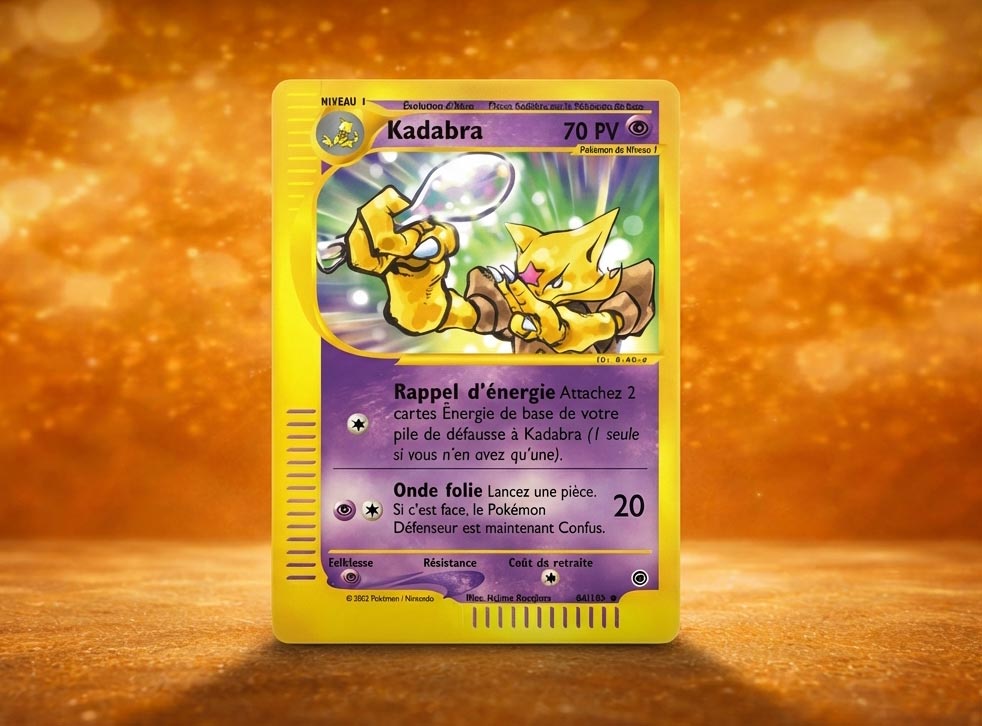
In November 2020, Uri Geller withdrew his objection, clearing the way for Kadabra's return to the TCG. The first new printing appeared in 2023 in the Pokémon 151 set.
Kadabra 69 (Skyridge, 2003)
This card belongs to Skyridge (the Diamond & Pearl) series, released in 2003. It is a 70 HP Psychic-type Stage 1 Pokémon numbered 69/144, illustrated by Toshinao Aoki. Its attacks are Nightmare and Mind Shock, and the artwork places Kadabra against a dark background.
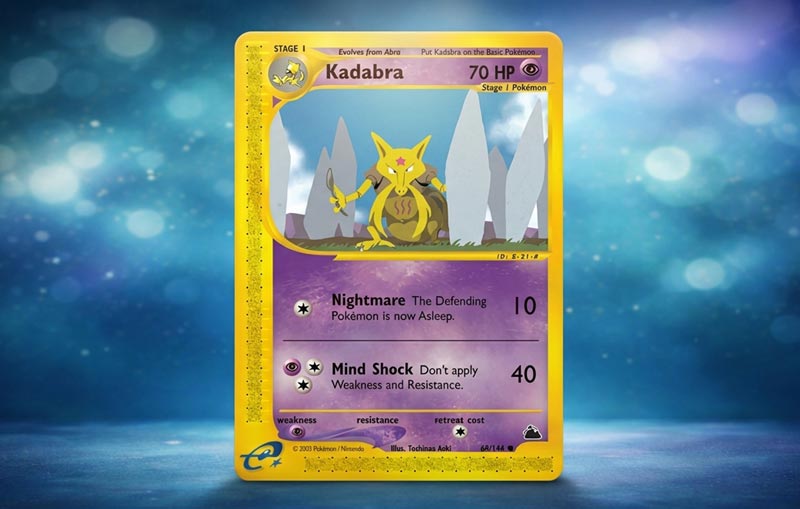
The regular printing is non-holographic, with a parallel Reverse Holofoil printing. Copies remain available on the secondary market. The article's 2025 price reference places a Near Mint regular copy at approximately €10–20, while a Reverse Holo copy may reach approximately €80–100.
Skyridge cards do not have a special magnetic function. Confusion can arise from two aspects of their construction:
- The e-Reader strip : the dotted strip along the left or lower edge is designed for the Game Boy Advance e-Reader. Its operation is optical rather than magnetic.
- Texture and metallic-looking finishes : holographic cards can have a reflective printed layer, particularly Holo Rare or Reverse Holo. The printed finish should not be confused with a functional magnetic feature . Its appearance results from the materials and printing process, rather than a magnetic game mechanism.
Kadabra 64 (Pokémon 151, 2023)
The expansion Pokémon 151, released in 2023, includes the original 151 Pokémon. Kadabra is numbered 64/165, a Psychic-type Stage 1 with 80 HP, illustrated by Mitsuhiro Arita. Its Teleportation attack deals 30 damage and allows a switch with a Benched Pokémon. Its rarity is Uncommon . A Reverse Holo printing is also available.
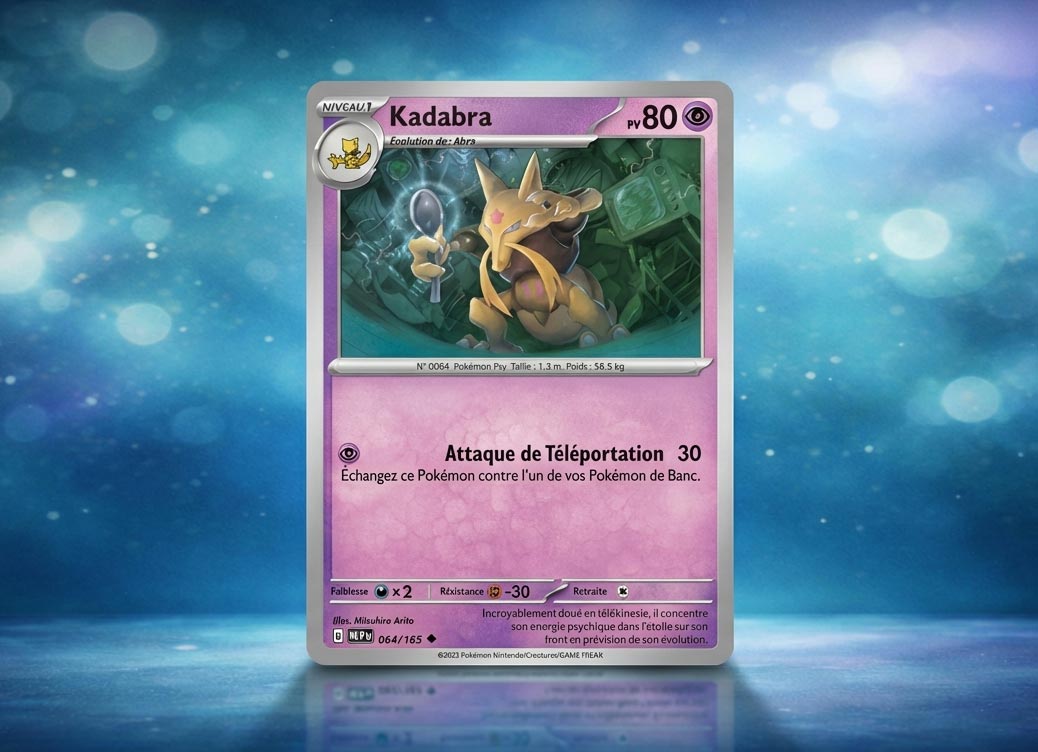
This Kadabra was the Pokémon's first new TCG printing after its long absence. Released alongside Alakazam ex 65, it restores the evolution line to a new set.
The article's 2025 reference describes Near Mint copies available for a few euros. Its position as the first Kadabra printed since 2003 may interest collectors, but does not guarantee future price increases.
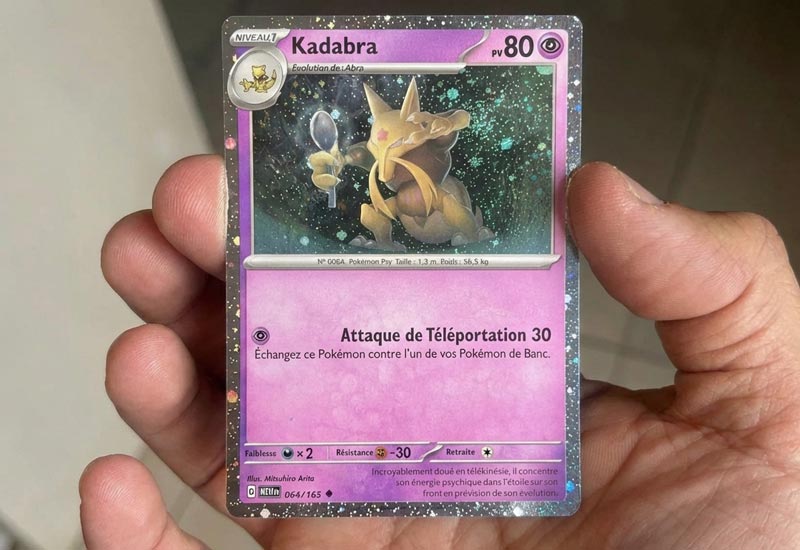
The card Kadabra 064/165 from Pokémon 151 has different finishes depending on distribution. The version in standard booster packs is non-holographic, alongside a parallel Reverse Holo printing in the same products. Another printing distributed through specific packs or themed products has a Cosmos Holo pattern sur la zone d’illustration, identifiable par ses reflets circulaires dispersés. Ce traitement visuel n’est pas utilisé pour les versions régulières des boosters.
Different finishes with the same number 064/165 can cause confusion, particularly between Reverse Holo and the Cosmos Holo. Reverse Holo affects the card outside the illustration, whereas Cosmos Holo applies its distinct pattern within the artwork. The finish therefore needs identification before comparing copies or values.
Practical collecting considerations
- Checking condition means examining corners, edges and surfaces for wear or scratches.
- Language and edition also matter: demand may differ between English, Japanese and French copies.
- Storage should protect cards from moisture and direct light, using suitable sleeves, rigid holders or binders.
- Price comparisons should use equivalent copies across several selling platforms.
- Seller selection should favour verifiable sellers and clear product photographs to reduce counterfeit risk.