
Among Pokémon illustrators, Shinji Kanda has become a regularly discussed name among collectors. Dense compositions, strong contrasts and prominent Pokémon within detailed scenesmake his cards recognisable across sets.
Collecting strategies have often focused on particular Pokémon such as Charizard, Pikachu, Gengar and Venusaur. That focus has broadenedas illustrators become more visible. The artist's name increasingly influences collecting and purchasing decisions.
An artist-focused collection can complement a Pokémon-based one. A recognisable style and repeated interest in particular cards can support a focus on one illustrator over the medium or long term, without guaranteeing price growth.
Shinji Kanda cards selected by TCG Insight
TCG Insight's selection focuses on specific referencescombining distinctive illustrations with established collecting interest.

Giratina V 186/196 — Sword & Shield: Lost Origin

Magikarp 203/193 — Scarlet & Violet: Paldea Evolved


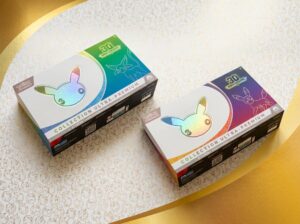
Oricorio EX 024 — Mega Charizard Ultra-Premium Collection

Seismitoad 105/86 — Black Bolt EV10.5

Roaring Moon 162/131 — Prismatic Evolutions

Galarian Moltres SWSH284 — Sword & Shield promo
Magikarp's upward leap

The illustration is visually dense, with detail across almost the entire surface. Its linework recalls engraving or woodblock prints, combined with intense colour and movement, Kanda's visual approach.
At the centre, Magikarp leaps upwards through a bright waterfall. Its red-orange body contrasts with the dark surroundings. It appears mid-jump, with an open mouth and outstretched fins.
The water creates a strong vertical line, directing attention towards the Pokémon through a column of blue light.

Public information about Shinji Kanda
Shinji Kanda, or カンダシンジ is a Japanese illustrator credited in the Pokémon TCG since the early 2020s. Public biographical information is limited. The most direct records are official card credits, specialist catalogues and the artist's public online accounts.

Available biographical details
The limited biographical material cited describes a birth in Japan in the mid-1980s, followed by artistic study in Kyoto. His illustration and design work preceded regular Pokémon TCG credits. No detailed public chronology is given for work outside Pokémon.
His early TCG credits appeared in recent sets before more widely discussed full-art cards increased his visibility among collectors.
Public and professional presence
His public communication mainly consists of posts about his artwork, with limited discussion of private life. The illustrations remain the main focus.
Visible public posts mainly concern artwork and professional announcements alongside business contact information. They do not justify assumptions about private matters.
Recurring visual features
Several features can be observed directly in Shinji Kanda's cards. His style uses complex compositions, with the Pokémon strongly defined within detailed surroundings. Multiple layers and directional lines suggest movement.
- Detailed backgrounds, including textures and repeated patterns.
- Strong contrasts, alternating dark and bright areas.
- Directional movement, creating tension within the scene.
- Clearly separated visual layers, keeping the subject identifiable.
Collector reception
Across several sets, Shinji Kanda's name has become a selection criterion for some collectors. Interest concentrates on particular cards rather than every illustration, especially higher-rarity references and popular Pokémon.
Summary of available reference points
| Detail | Observable information | Evidence basis |
|---|---|---|
| Background | Japanese illustrator with artistic study in Kyoto | Reported biographical information |
| Entry into the TCG | Early 2020s | Official card credits |
| Visual style | Dense compositions and strong contrasts | Direct observation of the cards |