
A first Pokémon purchase often raises the question: where should a collection start? The number of products can lead to scattered purchases. One defined historical focus is Base Set, whose age and familiarity attract collectors without guaranteeing returns.
Contents
Base Set and the 1999 Wizards era
First-edition Base Set is a historical reference for collectors. It marks the 1999 international launch and is familiar to both new and experienced collectors. Its established position is sometimes compared with a conservative collecting choice although prices can fall as well as rise.
At the 1999 US launch, a Base Set booster cost approximately US$3–3.50. A 36-pack box is estimated at around US$100–110 based on pack prices, or roughly US$100 for a complete box.

Historical price summary for France in 1999:
- An 11-card booster pack : approximately 25 francs (€3.80).
- A complete booster box of 36 packs: approximately 900 francs (€140), an unofficial estimate based on individual pack prices.
Some Base Set boxes later reached asking or sale levels around €45,000–60,000. The following calculation illustrates the scale of that historical difference.
An illustrative increase of 39,900% reflects a very long holding period, with the product retained from its original release. Ce qui n’est pas notre cas…, alors concentrons-nous sur ce qu’il reste à faire.

The place of PSA 10 in collecting
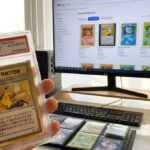
Within graded Pokémon collecting, PSA 10 attracts particular interest. Certification provides a standardised condition opinion and reduces some uncertainty, but it remains a grading opinion. Other services include Beckett with their own scales and market preferences.
One possible starting point is the three Base Set booster-artwork variants graded PSA 10, potentially with sequential certification numbers (three consecutive grading numbers). Consecutive numbers can reflect a grouped submission and provide additional consistency within a display set. They do not independently establish the full provenance. The cited budget is more than €4,500.
Illustrative cost breakdown : three French first-edition Base Set packs in PSA 10 — Charizard €1,800, Blastoise €1,500 and Venusaur €1,500 — total €4,800. The printing and language need matching.
First edition and later printing
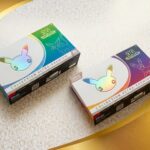
Their packaging differs only in small details , which may not be obvious in a listing.
First-edition Base Set correspond à la toute première impression, reconnaissable à ses symboles, ses couleurs et certaines cartes aujourd’hui devenues rares. Il est impératif d’avoir the small first-edition stamp on the applicable packs and cards.

The later Base Set printing is generally more accessible, with different collecting demand from first edition.
Resealed loose booster-pack risks
Terminology: Loose means a product without its outer blister or box (removed from a box). A loose booster can still be factory sealed; the term alone does not mean it has been opened.
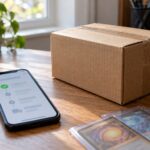
PSA-graded booster packs have undergone the grading service's authentication process. Some individually sold vintage packs have been opened and resealed. Detection can require specialist examination, so caution is necessary particularly at the high prices of vintage loose packs.
Pack weight : during the Base Set era, packs could be weighed. Heavier packs were more likely to contain a holographic card. A graded pack should not be assumed to contain one; some are light packs. The collecting objective may instead be preserving an intact sealed packfrom the original distribution period.
Bon, …. si jamais vous cédez à la tentation d’acheter un booster SDB Éd.1 non gradé (en loose), seller assessment is especially important. Relevant details include any weight information, clear seal photographs and a verifiable history of comparable sales. A practical principle : a lower price does not compensate for uncertain authenticity or missing product information.
A sealed Base Set box: a high-budget option
A sealed Base Set booster box requires a larger budgetthan individual cards or packs.
It generally suits buyers able to commit substantial funds and accept limited liquidity. The cited budget is above €40,000 for 36 packs, some of which contain holographic cards (often the higher-priced cards).
Cards for intermediate budgets
). For a smaller budget, a collection can focus on individual Base Set cards (Base Set). Charizard remains particularly sought afterand can exceed an initial collecting budget. Other references provide lower-cost alternatives.
Pikachu, for example, can be an alternative. Graded copies vary in price by grade, with its familiarity and early TCG appearance supporting recurring collecting interestamong Pokémon buyers.
Multiple copies may be available, although French PSA 10 supply varies. The cited PSA 10 range is €350–450.

Keeping a long-term collecting focus
PSA-graded vintage Base Set products do not naturally support an assumption of rapid resale profits. Leur évolution de prix s’inscrit dans le temps, avec des variations progressives. Dans une stratégie d’investissement longue durée, ces références permettent de organise a collection around a consistent theme. The article suggests considering a limited share of the overall collecting budget rather than concentrating all spending in one category.
Preferences differ between collectors. Some focus on PSA 10 Base Set cards while others collect only modern references. Different categories can spread collecting interests and reduce concentration, although they do not eliminate financial risk. A mixed collection is one possible approach.