

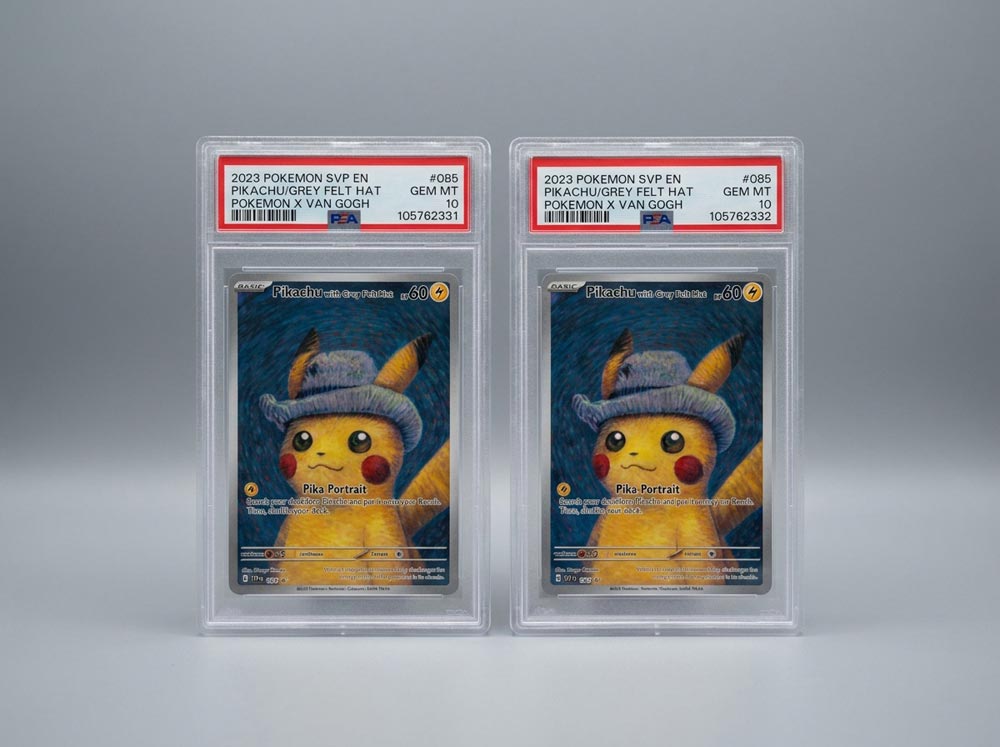
Two PSA 10s can show visible differences
A grade describes condition against a standard. It does not mean two copies have identical borders, cutting or colours. A collector may therefore prefer one card's appearance even when both labels show 10.
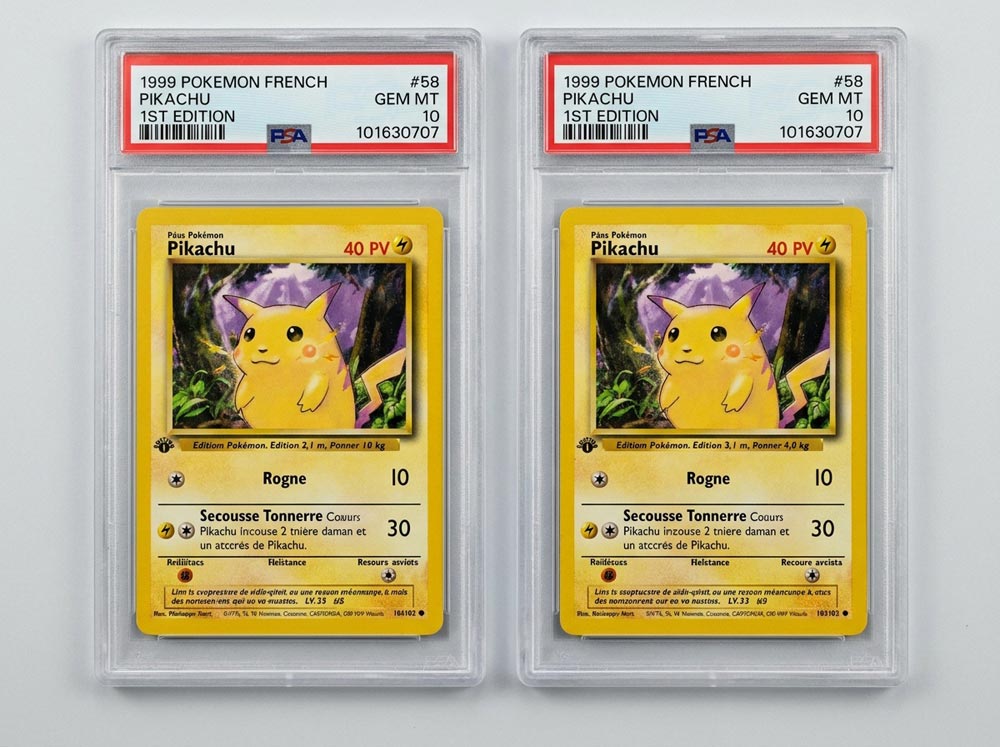
The PSA's published grading standards describe a virtually perfect condition. They include approximate centring of 55/45 on the front and 75/25 on the back, with a slight printing imperfection potentially compatible with the overall appearance. These guidelines, consulted on 4 October 2026, are neither a way to grade a photograph nor a guarantee for a new submission.
A consistent photography method before comparison
The comparison begins with the same reference, language and edition. French first-edition Pikachu 58/102 is not directly equivalent to an unstamped copy. Certificate numbers stay associated with the photographs to avoid mismatching fronts and backs.
Each holder rests on the same matte background under diffuse light. The camera stays at the same height, perpendicular to the surface. Framing includes the entire card and holder edges. Two angled views then help distinguish reflections, plastic marks and surface details.
| View | Feature examined | Precaution |
|---|---|---|
| Full front | Left/right and top/bottom borders | Same distance, without perspective distortion. |
| Full back | Centring, corners and any white marks | Identical white balance. |
| All four corners | Cutting and corner condition | Close-ups at the same scale. |
| Angled surface | Reflections, lines and printing | Same direction of light. |
| Holder and label | Scratches, seals and certificate | Distinguish plastic from card stock. |
Measuring centring without treating a photograph as an appraisal
For opposite borders, the calculation uses their relative widths. Borders of 45 and 55 pixels give 45/55. Vertical and horizontal centring are examined separately. A tilted image or a partially hidden border invalidates the measurement; the result should then remain unrecorded.
Corners and surface prevent the examination from being reduced to centring alone. A well-centred card may have a flaw difficult to see through plastic, while an apparent mark may belong to the holder. A clear assessment identifies both readable and unreadable areas.
An A/B worksheet based on observations
| Criterion | Copy A | Copy B |
|---|---|---|
| Reference, language and edition | To record | To record |
| Certificate and date checked | To record | To record |
| Front/back centring | Measured or not measurable | Measured or not measurable |
| Corners and surface | Description without an invented grade | Description without an invented grade |
| Holder condition | Observed marks | Observed marks |
| Delivered cost | Price and fees | Price and fees |
An aesthetic preference does not change the grade
A useful conclusion gives a specific reason: more even borders, better-documented colours, a cleaner holder or lower delivered cost. Preferring one copy is distinct from alleging a certification error. A visible difference does not justify assigning another grade.
The PSA certificate verification accompanies inspection of the holder without replacing authentication. The explanation of the grading process and the collectible card buying guide complete these checks. Without comparable photographs, the preference remains provisional: identical labels do not remove the need to document each copy.