

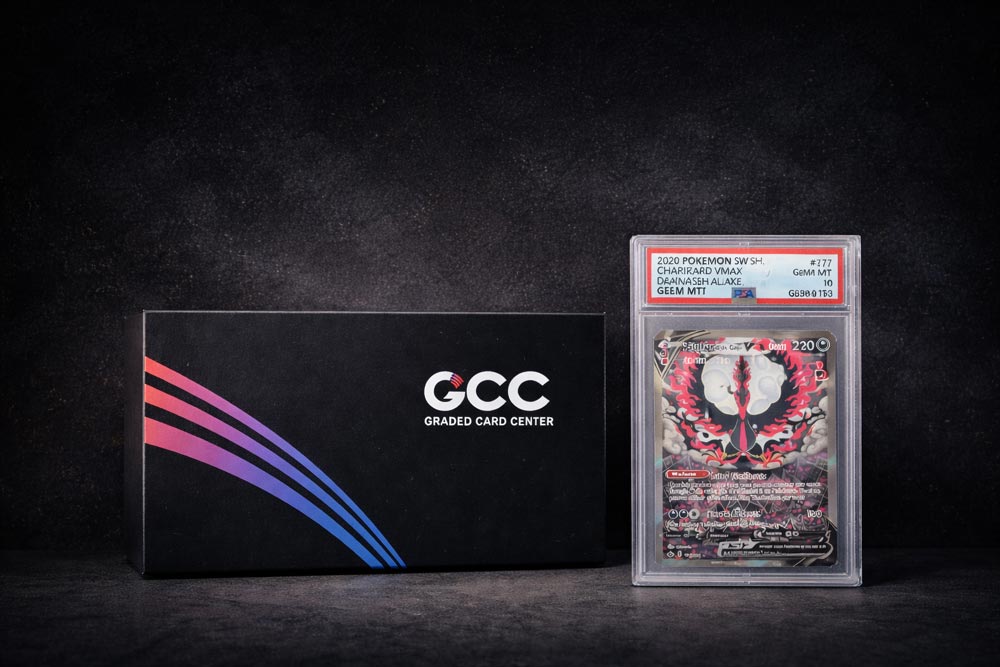
Trading-card grading is widely used for authentication, condition assessment, physical protection and clearer secondary-market comparisons. GCC (Graded Card Center) operates as an intermediary for PSA submissions, helping organise the process and explain the available service options according to the cards and submission requirements.
Contents
How card grading works
Grading assesses corners, edges, surfaces and print centring under a company's standards. A numerical grade is assigned, followed by encapsulation in a sealed rigid holder, commonly called a slab.

Grading can help :
- describe condition using an established scale;
- reduce handling and physical damage;
- support transactions between collectors;
- provide a condition reference for resale or transfer.
It is especially common for sports cards, Pokémon cards, older trading-card games and sought-after printings. Companies use different standards and their market recognition can affect demand.
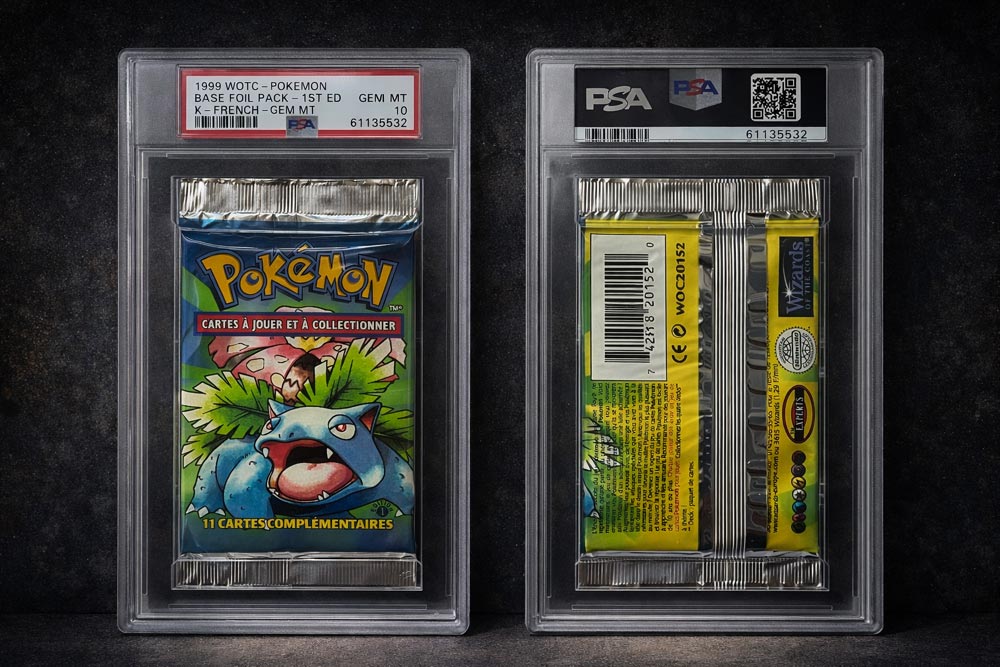
PSA also accepts sealed booster packs for gradingwithout opening them, assessing authenticity and packaging condition.
PSA's place in card grading
PSA (Professional Sports Authenticator) is a widely recognised grading company. Its 1–10 scale is frequently used in market comparisons. PSA cards have a verifiable certification number and a standard holder.
Direct submission can involve: international shipping and customs paperwork, service-dependent turnaround times, fees, insurance and return arrangements. These can complicate a first submission, particularly for small batches.

GCC as a PSA intermediary
GCC receives cards, checks submission requirements and prepares them before sending them to PSA for grading. The graded cards return through GCC to their owner.
The intermediary aims to simplify access to PSA without deciding the grade. PSA provides the assessment, holder and certification. Practical reasons for using an intermediary include administrative convenience :
- one contact for submission and tracking;
- grouped shipping arrangements;
- fewer individual logistics steps;
- clearer service comparisons.
Card handling and logistics
An intermediary's service depends substantially on logistics. GCC coordinates several stages : receipt, inventory, packaging and batch tracking. Identifying each card helpsreduce confusion or loss.
Packaging must meet PSA's requirements. Correct preparation can prevent delays caused by non-compliant holders or incomplete paperwork.
Grouped submissions can also share some transport costs and limit repeated handling.
Grading services available through GCC
Service choices depend on desired turnaround, declared value and submission volume. They correspond to PSA service tiers, with intermediary handling added.
| Service type | Indicative turnaround | Typical use |
|---|---|---|
| Standard service | Several weeks to several months | Cards without a strict return deadline |
| Expedited service | Shorter estimated turnaround | Time-sensitive submissions |
| Premium service | Priority processing | Higher declared-value cards |
Turnaround depends on PSA's workload and can change. Estimates are not guaranteed return dates. The site's reported experience suggests allowing at least six monthsfor some submission routes; the applicable estimate needs checking before sending.
PSA grading costs
Fees depend on several factors: service level, declared value, card quantity and additional options. Clear pricing helps compare an initial estimate with the final charge.
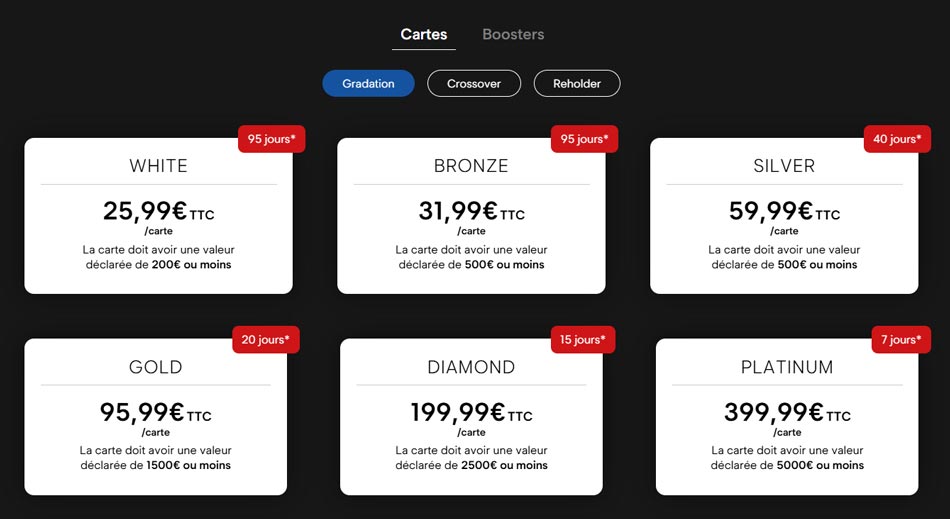
An intermediary can also coordinate additional costs, including insurance, secure transport and customs administration, according to the service terms.
This can suit a collector seeking a clearer total budget, although the per-card cost may differ from a direct submission depending on volume and service tier.
Tracking cards during grading
Tracking provides visibility during a potentially long grading period. GCC uses internal submission references and PSA certification numbers once assigned. These can help:
- identify cards through the process;
- check submission progress;
- reduce uncertainty during long waits.
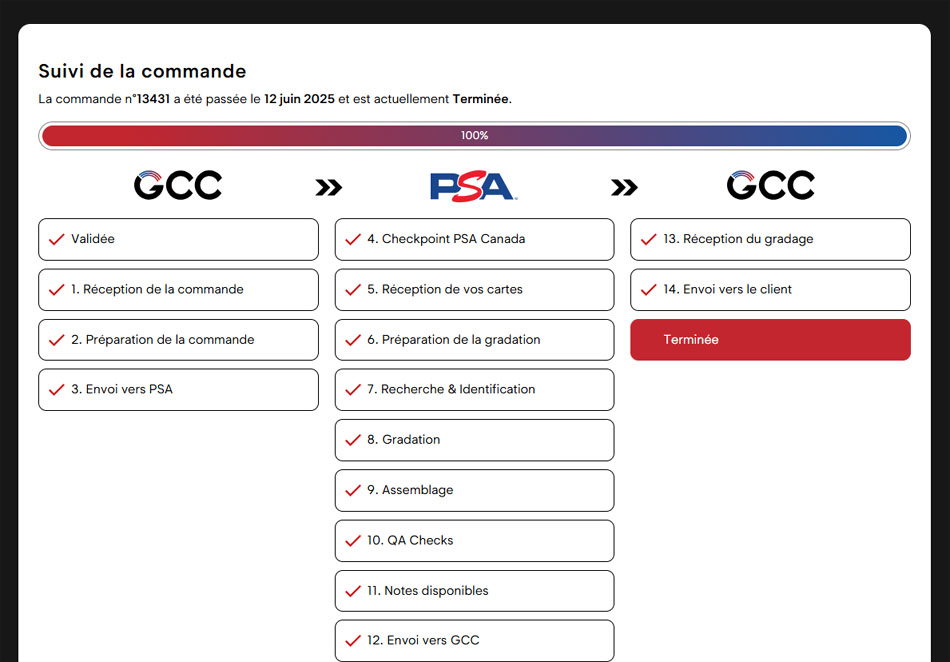
Although processing speed remains dependent on PSA, GCC serves as the contact for information and administrative adjustments.
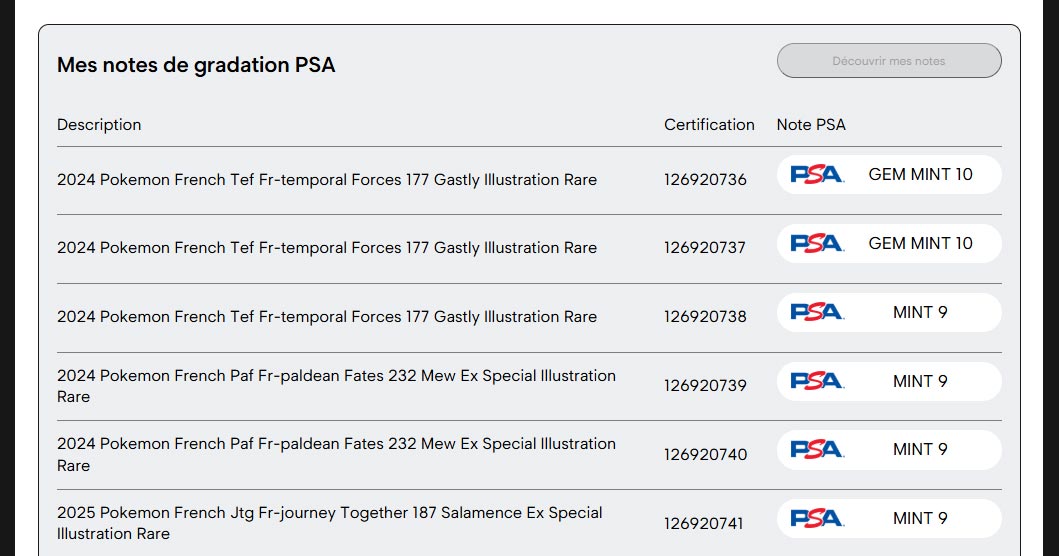
After PSA completes grading, and before the cards physically return to GCC, the assigned grades can be viewed through GCC's website.
Checks before submitting
Using GCC does not remove PSA-related uncertainty. Turnaround can vary. The grades remain independent of the intermediaryand may be lower than expected. Any review process follows the grading company's terms.
A realistic declared value is also required to avoid unexpected service-level adjustments. An underestimated value can lead to an additional charge before return.
Who may use GCC's service?
GCC primarily serves collectors who want PSA grading without organising every step themselvesincluding individuals, occasional resellers and owners of both small and larger batches.
The intermediary combines PSA's grading service with local administration, tracking and return arrangements. PSA still determines the certification and grade.
What is a PSA crossover?
The A PSA crossover means submitting a card graded by another company for PSA assessment such as BGS, CGC or SGC.
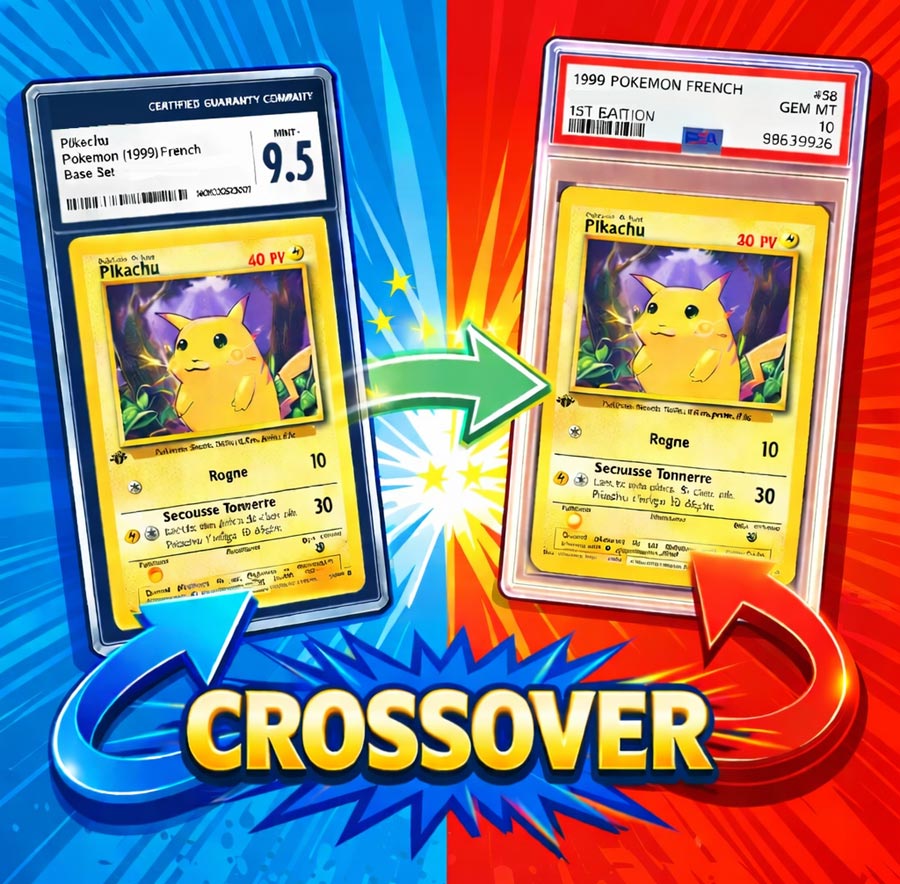
A Crossover starts with the card in another company's holder so PSA can apply its own grading criteria and, where the requested conditions are satisfied, place it in a PSA holder. The card is initially assessed against PSA's standards while still in its existing holder. The selected minimum-grade option determines whether it is reholdered or returned unchanged.
Main options include: Minimum grade or no minimum grade
- Crossover with a minimum grade : a requested minimum, such as PSA 9, sets the acceptance threshold. If it is not met, the card returns in its original unopened holder.
- Crossover without a minimum grade : the holder change may proceed even if the resulting PSA grade is below expectations. This carries greater grade uncertainty.
Reasons for a PSA crossover
Possible motivations include:
- Market liquidity : PSA copies may have more potential buyers in some markets.
- Valuation : comparable PSA copies may trade differently, depending on reference and grade.
- A consistent collection : some collectors prefer matching holders.
- Market comparison : PSA grades are widely used in sales records.
The site's assessment is cautious about crossover submissionsbecause another company's grade does not guarantee an equal or higher PSA grade.
Replacing an older PSA holder with a newer one is a separate reholder service rather than a crossover; its fees should be checked against the purpose. If the aim is a fresh PSA assessment of a card certified elsewhere, another route is a raw submission after removal from its holder, with handling-damage risk and no guarantee of the new grade.