
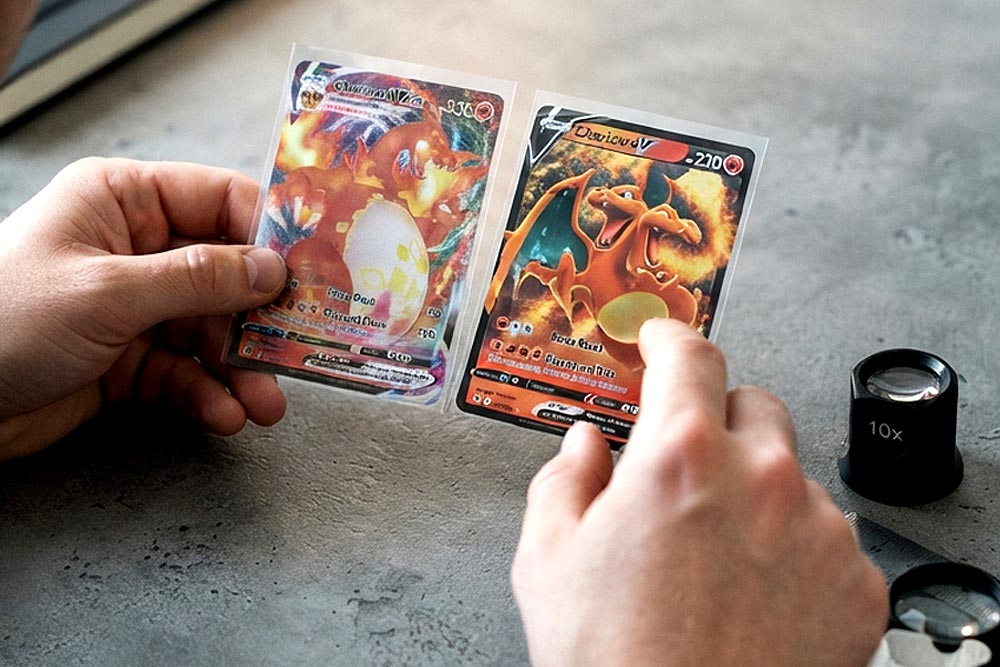
Identifying the card before looking for a flaw
Checking starts with the name, number, expansion and language. An illustration may appear in several products with different numbering or markings. Comparing a merely similar card can produce a wrong conclusion. The Pokémon expansion index helps locate the correct reference.
Printing period also matters. Borders, rarity symbols and text layouts change between sets. Yellow borders on an older French card and silver borders on a newer card require different comparisons. A general rule drawn from one example is insufficient.
Comparing text, symbols and layout
The easiest elements to compare include the name, HP, attack costs, accents and symbols. An inconsistent font, misplaced text block or attack differing from the reference warrants further examination. Sharp photographs help distinguish printing problems from simple blur.
The illustrator's name, collector number and bottom text also support identification through their contents and position. Correct text alone does not prove authenticity because a reproduction can copy it.
| Area | Useful observation | Limitation |
|---|---|---|
| Text and symbols | Spelling, numbers, Energy symbols and alignment. | A reproduction may contain the correct text. |
| Borders and cutting | Compared dimensions, corner shapes and margins. | Off-centre printing may be a manufacturing flaw. |
| Colours on the back | Comparison with a reliable copy of the same language edition. | Lighting and white balance change apparent colours. |
| Shine and texture | The expected finish for the exact reference. | A straight-on photograph may hide texture and reflections. |
| Provenance | Listing, seller, actual-item photographs and available records. | Packaging or a feedback score alone is insufficient. |
Examining the finish from several angles
Shine depends on the card's finish. Some references are textured and others smooth, so an absence of texture does not prove every card counterfeit. The relevant question is whether this version should have a textured surface and where it should appear.
A short video with a slow rotation under soft light can supplement photographs. It shows moving reflections and some surface details. Highly reflective protection may obscure them. Additional views can be provided with careful handling.


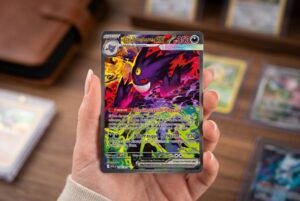
Bulbasaur 166/165 and Venusaur ex 198/165 serve as reference examples here. Digital images identify the cards but do not faithfully reproduce every texture and physical effect. They cannot authenticate a photographed copy on their own.
Quick tests do not provide a certain verdict
ThePokémon support mentions excessive transparency under strong light as one possible warning sign. That check still needs a reliable comparison. Lamp intensity, finish and how the card is held change the observation.
Tearing, scratching, sharply bending or applying products can damage a card and is not justified by a buying check. A cardboard layer shown in a video also proves nothing about a copy listed by another seller.
Checking the listing and seller
A detailed listing shows the actual card's front, back, corners and edges. Catalogue images do not describe its condition. For an expensive purchase, a specific additional photograph can help establish that the seller possesses the item without guaranteeing authenticity.
Recent reviews, comparable transactions and consistent answers matter more than pressure to buy. A low price warrants checking, while a high price does not validate a card. The page on reported websites supports seller checks without replacing examination of the item.
What happens when doubts remain?
A specialist shop can examine a physical card and explain observed inconsistencies. Professional authentication may be considered for some copies after accounting for its cost. A useful assessment separates visible facts, inconsistencies and points that cannot be confirmed.
An unresolved inconsistency justifies postponing a purchase. After delivery, the buyer retains the packaging, listing, messages and photographs. A concern should be reported through the platform's process within its deadlines, without altering the card. The Pokémon collecting guide brings together the other provenance, condition and delivery checks.