Fire attacks against Grass Pokémon and opponents with two types can be checked through the weaknesses, resistances and immunities of all 18 Pokémon types in this interactive chart, with a printable copy available.
This table follows the standard main-series video game rules from Generation VI onwards. It shows type effectiveness, not an attack's final damage.
A4 landscape vector PDF · high-resolution JPG, 3,508 × 2,480 px · free downloads in French
Check an attack's effectiveness
The selector uses the attack type and the defender's type, with an optional second defensive type.
Feu contre Plante : ×2.
The complete chart of 18 types
Rows: attack type. Columns: defender's type. On mobile, the table scrolls horizontally while row names stay visible.
| Attack ↓ Defence → | Steel | Fighting | Dragon | Water | Electric | Fairy | Fire | Ice | Bug | Normal | Grass | Poison | Psychic | Rock | Ground | Ghost | Dark | Flying |
|---|---|---|---|---|---|---|---|---|---|---|---|---|---|---|---|---|---|---|
| Steel | ×½ | ×1 | ×1 | ×½ | ×½ | ×2 | ×½ | ×2 | ×1 | ×1 | ×1 | ×1 | ×1 | ×2 | ×1 | ×1 | ×1 | ×1 |
| Fighting | ×2 | ×1 | ×1 | ×1 | ×1 | ×½ | ×1 | ×2 | ×½ | ×2 | ×1 | ×½ | ×½ | ×2 | ×1 | ×0 | ×2 | ×½ |
| Dragon | ×½ | ×1 | ×2 | ×1 | ×1 | ×0 | ×1 | ×1 | ×1 | ×1 | ×1 | ×1 | ×1 | ×1 | ×1 | ×1 | ×1 | ×1 |
| Water | ×1 | ×1 | ×½ | ×½ | ×1 | ×1 | ×2 | ×1 | ×1 | ×1 | ×½ | ×1 | ×1 | ×2 | ×2 | ×1 | ×1 | ×1 |
| Electric | ×1 | ×1 | ×½ | ×2 | ×½ | ×1 | ×1 | ×1 | ×1 | ×1 | ×½ | ×1 | ×1 | ×1 | ×0 | ×1 | ×1 | ×2 |
| Fairy | ×½ | ×2 | ×2 | ×1 | ×1 | ×1 | ×½ | ×1 | ×1 | ×1 | ×1 | ×½ | ×1 | ×1 | ×1 | ×1 | ×2 | ×1 |
| Fire | ×2 | ×1 | ×½ | ×½ | ×1 | ×1 | ×½ | ×2 | ×2 | ×1 | ×2 | ×1 | ×1 | ×½ | ×1 | ×1 | ×1 | ×1 |
| Ice | ×½ | ×1 | ×2 | ×½ | ×1 | ×1 | ×½ | ×½ | ×1 | ×1 | ×2 | ×1 | ×1 | ×1 | ×2 | ×1 | ×1 | ×2 |
| Bug | ×½ | ×½ | ×1 | ×1 | ×1 | ×½ | ×½ | ×1 | ×1 | ×1 | ×2 | ×½ | ×2 | ×1 | ×1 | ×½ | ×2 | ×½ |
| Normal | ×½ | ×1 | ×1 | ×1 | ×1 | ×1 | ×1 | ×1 | ×1 | ×1 | ×1 | ×1 | ×1 | ×½ | ×1 | ×0 | ×1 | ×1 |
| Grass | ×½ | ×1 | ×½ | ×2 | ×1 | ×1 | ×½ | ×1 | ×½ | ×1 | ×½ | ×½ | ×1 | ×2 | ×2 | ×1 | ×1 | ×½ |
| Poison | ×0 | ×1 | ×1 | ×1 | ×1 | ×2 | ×1 | ×1 | ×1 | ×1 | ×2 | ×½ | ×1 | ×½ | ×½ | ×½ | ×1 | ×1 |
| Psychic | ×½ | ×2 | ×1 | ×1 | ×1 | ×1 | ×1 | ×1 | ×1 | ×1 | ×1 | ×2 | ×½ | ×1 | ×1 | ×1 | ×0 | ×1 |
| Rock | ×½ | ×½ | ×1 | ×1 | ×1 | ×1 | ×2 | ×2 | ×2 | ×1 | ×1 | ×1 | ×1 | ×1 | ×½ | ×1 | ×1 | ×2 |
| Ground | ×2 | ×1 | ×1 | ×1 | ×2 | ×1 | ×2 | ×1 | ×½ | ×1 | ×½ | ×2 | ×1 | ×2 | ×1 | ×1 | ×1 | ×0 |
| Ghost | ×1 | ×1 | ×1 | ×1 | ×1 | ×1 | ×1 | ×1 | ×1 | ×0 | ×1 | ×1 | ×2 | ×1 | ×1 | ×2 | ×½ | ×1 |
| Dark | ×1 | ×½ | ×1 | ×1 | ×1 | ×½ | ×1 | ×1 | ×1 | ×1 | ×1 | ×1 | ×2 | ×1 | ×1 | ×2 | ×½ | ×1 |
| Flying | ×½ | ×2 | ×1 | ×1 | ×½ | ×1 | ×1 | ×1 | ×2 | ×1 | ×2 | ×1 | ×1 | ×½ | ×1 | ×1 | ×1 | ×1 |
Outlined cells match the current selection. Numbers remain readable independently of colour.
Reading weaknesses and resistances
The starting point is the type of the move used, which may differ from the attacking Pokémon's type. Its row intersects with the defender's column. ×2 increases effectiveness, ×½ reduces it, ×0 indicates immunity and ×1 is neutral.
A defensive type's weaknesses appear down its column: ×2 cells identify the attack types that are effective against it.
Dual types: three useful examples
Double weakness
2 × 2 = 4A Rock attack against a Fire/Flying Pokémon such as Charizard combines two weaknesses.
Two effects cancel out
2 × ½ = 1Fire against Grass/Water: Grass's weakness is offset by Water's resistance.
Immunity takes precedence
2 × 0 = 0Electric against Water/Ground: Ground's immunity cancels effectiveness against Water.
Two resistances give ×¼. The selector automatically multiplies the effects for both selected types.
What about the Pokémon Trading Card Game?
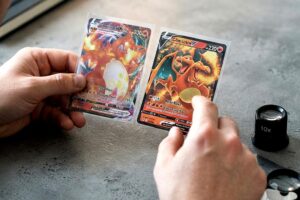
The Pokémon TCG uses the Weakness and Resistance printed on the card, together with card effects. Video game types and rules do not transfer directly. Cards from each expansion are available in the Pokémon expansion index.
Frequently asked questions
Does this chart apply to the earliest generations?
It presents the standard chart from Generation VI onwards. Older games differ, including the absence of the Fairy type.
Why might an attack produce a different result?
An Ability, item, particular move or special mechanic may change the result. The selector considers only the entered types and calculates neither STAB nor complete damage.
Which version is best for printing?
The PDF stays sharp at different sizes, while the JPG is convenient to save on a phone. Both downloadable files retain French labels and A4 landscape layout. PRINT prepares the page and opens the browser's print dialogue.
Are the multipliers identical in Pokémon GO?
No. This reference uses standard main-series rules; Pokémon GO has its own multipliers.
A chart to keep nearby
A complete one-page reference for a binder or phone.
Print settings: A4 landscape, fit to page, with browser headers and footers disabled.