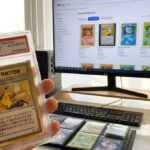


Before a Pokémon card is bought or sold, a key consideration is its actual market value. A realistic price reference helps both buyers and sellers avoid poor comparisons. This requires research to identify prices for the exact card.
Identifying the card accurately
Accurate identification comes before valuation. Some cards have very subtle differences that can substantially affect price: first-edition or unlimited printing, a specific logo, set symbol, foil finish, print variation or collector number.

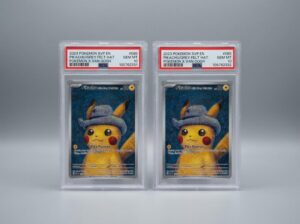
Two almost identical-looking cards can have very different prices because of these details. An example appears in the Pikachu cards above. Both carry the wording Base Set, but belong to different printings: the first has a first-edition stamp, while the second does not. The small first-edition logo distinguishes them.
Checking the exact name, year, set, printed number and condition helps prevent confusion and valuation errors. Accurate identification provides the basis for a useful comparison.
Estimating a card's market value online
Specialist platforms and online sales records mean valuation does not always require a visit to a physical shop or an expert. Exceptionally rare or valuable items may still justify professional assessment.
The initial step is to consult selling platforms and sales records (eBay, Cardmarket, Vinted and similar platforms) to observe comparable prices. Active listings alone are insufficient; the aim is to establish what buyers actually pay.
eBay's “ Sold items ” filter
eBay contains a large volume of Pokémon-card listings, making it a useful source of market comparisons. An asking price is not necessarily a sale price. A card may be listed for €50 without finding a buyer at that amount.

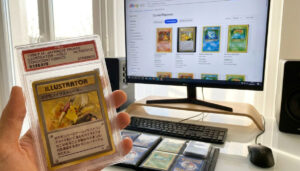
The Completed items and, especially, “ Sold items ” filters help identify transactions and recorded sale prices. This provides a more useful market reference than active asking prices alone.

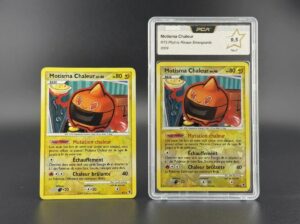
For the pictured Seismitoad card from Shinji Kanda, the cited comparisons suggest a buying or selling range between €80 and €100. A copy with the condition characteristics associated with a possible PSA 10 such as strong centring, clean surfaces and corners may attract a higher price, though a grade is never guaranteed.
Several sales over a defined period provide a better reference. One transaction does not establish a trend. Repeated sales near €20 over one or two months can support that amount as a recent price indication for equivalent copies.
Pokémon-card prices can change quickly with news, new sets, publicity or renewed demand. Historical comparisons therefore need a clear date and matching condition. A card sold for €20 today may sell for more or less in a few weeks.
A reliable approach combines completed-sales research, several comparable transactions and an understanding of how the market has changed.